



Insights from Business Builder Series Ep. 52 with Industrial Hygienist Craig Baker
When buyers, sellers, and agents hear the words asbestos or mold, fear usually follows. But according to Craig Baker—an industrial hygienist with more than 25 years of experience in asbestos testing, mold remediation, and environmental safety—misconceptions cause far more panic than the facts ever should. In this episode of the Business Builder Series, Baker breaks down what these hazards actually are, where they hide, how to deal with them properly, and what real estate agents must understand to protect their clients and themselves.
Baker’s message is clear: knowledge prevents bad decisions, unnecessary spending, and potential liability.

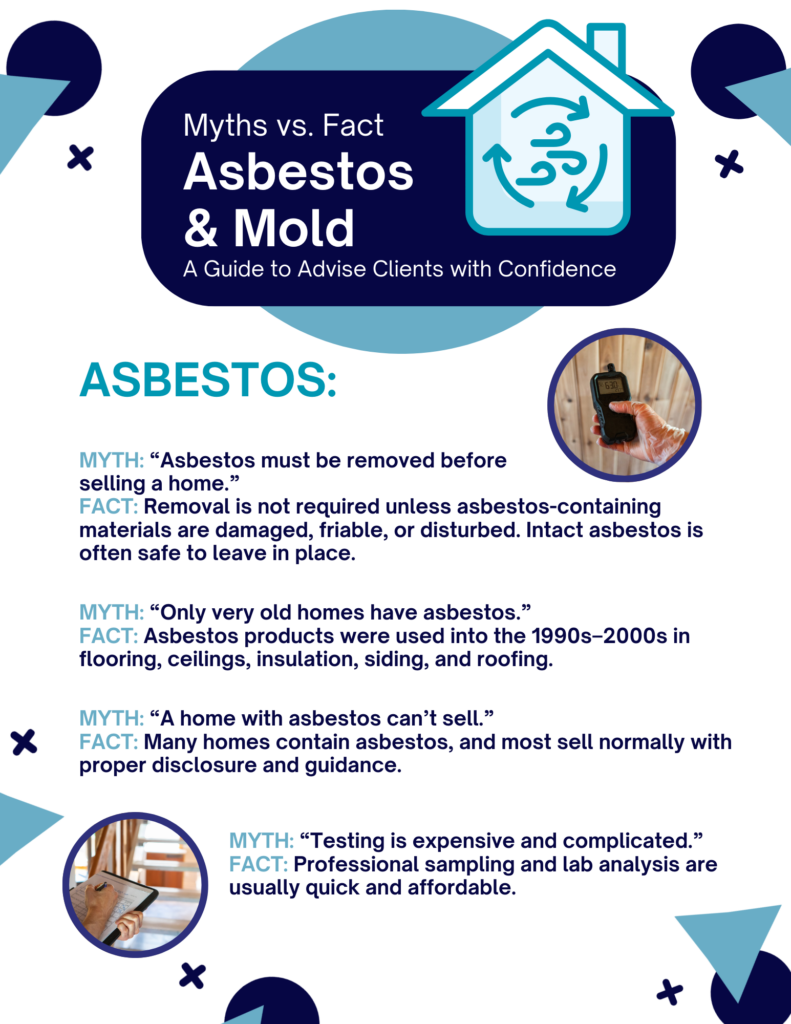
Asbestos is not a man-made toxin—it’s a naturally occurring mineral that was once celebrated for its durability, heat resistance, and low cost. That’s why it ended up in thousands of construction materials across decades of homebuilding. Today, many countries have completely banned it, but the United States has not. In fact, some imported ceiling tiles still legally contain asbestos.
For real estate professionals, two facts matter most:
-
You can’t identify asbestos just by looking at it.
-
Before any renovation or demolition—no matter the building’s age—an asbestos inspection is legally required.
A typical asbestos survey costs around $750–$1,500, depending on the number of samples needed. For properties undergoing upgrades or demolition, it’s a small investment that prevents big legal and safety issues.
Mold: Common, Fast-Growing, and Manageable With the Right Approach
Unlike asbestos, mold is everywhere—and always will be. Mold spores exist indoors and outdoors naturally. Mold only becomes a problem when moisture enters the equation. That means leaks, humidity, or even a vacant home with the HVAC turned off can create the perfect environment for growth in as little as 24–72 hours.
Baker emphasizes a few important truths:
-
Bleach doesn’t kill mold—it only removes stains.
-
Airflow and dehumidification matter more than any chemical.
-
Moisture control is the real solution, not spore elimination.
For agents, understanding the science behind mold helps you guide clients toward prevention instead of panic.
3 Key Takeaways for Real Estate Agents
1. Asbestos isn’t banned in the U.S.—and inspections are required before renovations.
Even newer properties may contain asbestos. If a client plans to remodel, sampling must happen first. Skipping this step can violate EPA rules and put everyone at risk.
2. Mold is inevitable, but mold problems are preventable.
Controlling moisture—not buying expensive chemicals—is the key to prevention. Educate sellers about keeping HVAC systems running, especially in vacant homes.
3. Facts reduce fear, protect clients, and protect your reputation.
Buyers often panic when they hear “asbestos” or “mold,” but informed agents can calmly explain risks, costs, and solutions—turning you into the trusted advisor they rely on.